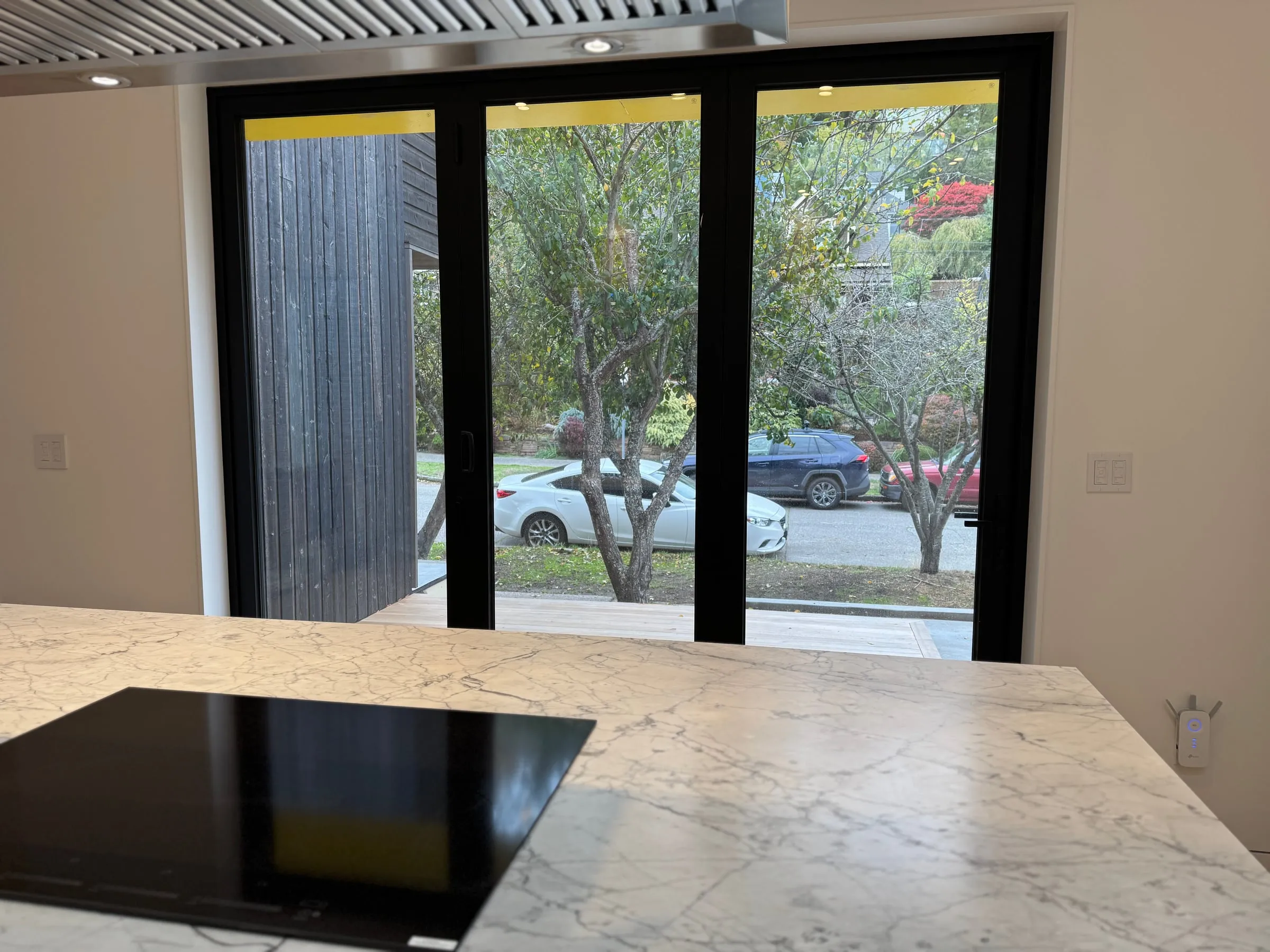
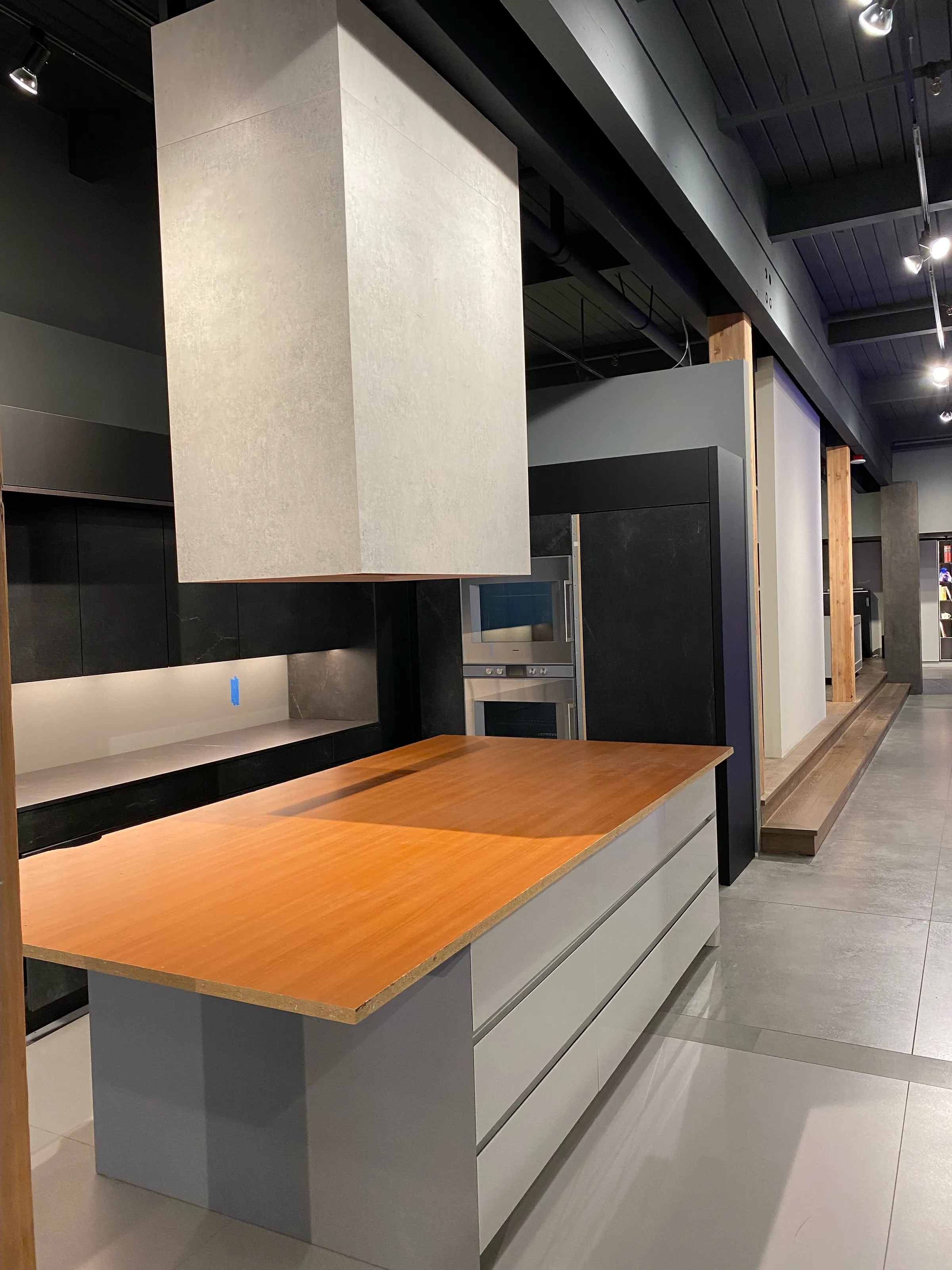
Kitchen · Sintered Stone
Seattle Contemporary Kitchen in Dekton Laos and Lapitec
Seattle, WA
A contemporary Seattle kitchen with Dekton Laos countertops, a Lapitec island with an induction cooktop and a stone-wrapped hood.
Read case studyCooktops
A hidden cooktop is an induction system mounted under your countertop, with the stone slab acting as the cooking surface. No glass top and no control panel, just a continuous slab with subtle markings for your pans.
It works only with the right slab, cabinet base and electrical, which is why we plan it early.
Scope of work
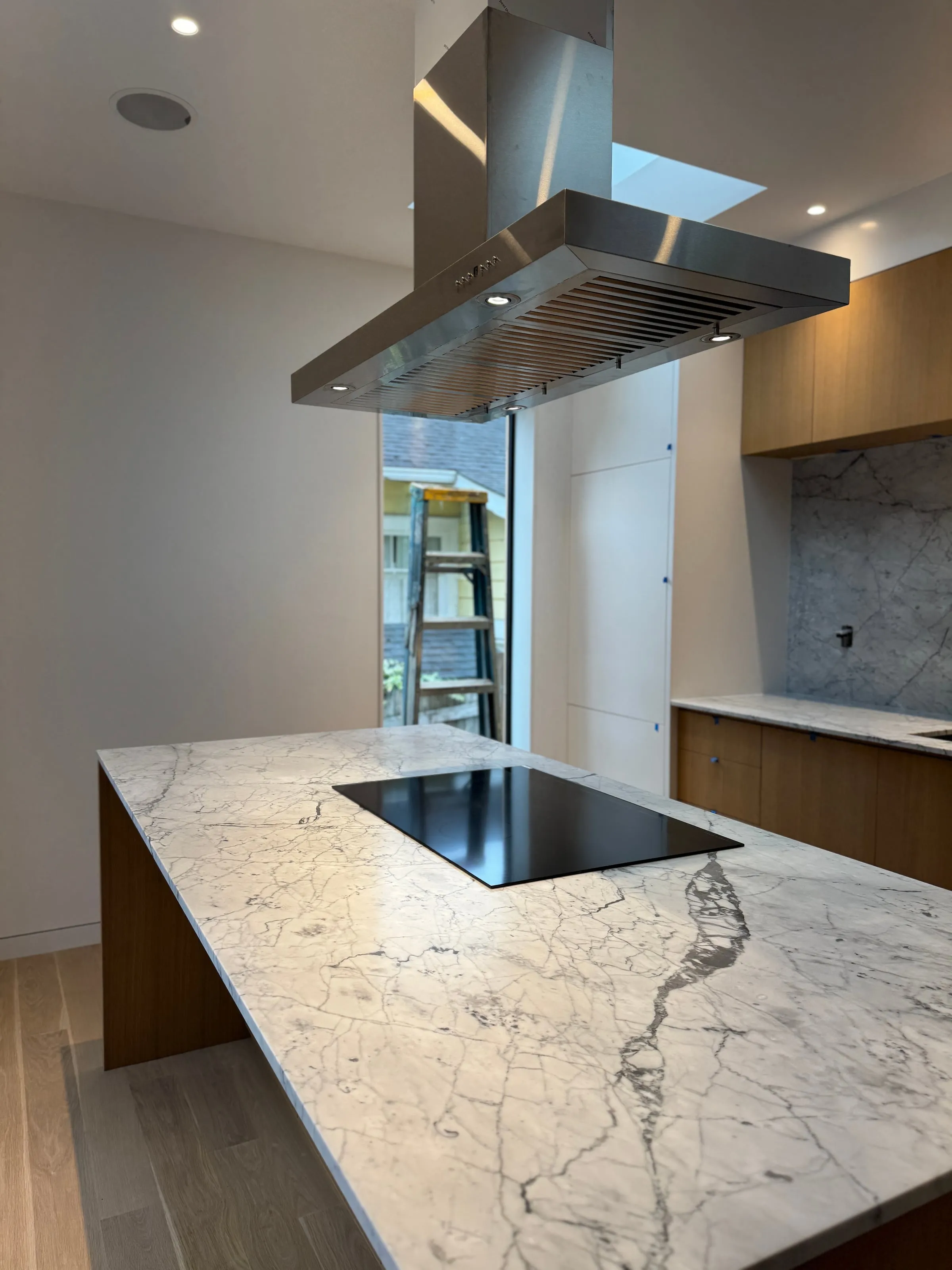
Hidden systems need a thin, compatible porcelain or sintered stone slab. We check yours against the manufacturer's list.
The slab is machined to receive the unit, and accurate placement matters for even heating.
The base must carry the unit, allow airflow and reach the dedicated electrical circuit.
The unit is bonded to the slab underside, wired by your electrician and tested with reference cookware.
Step by step
Placement is decided with the cabinets, not after they are built.
You choose a slab from the compatible brands and view it at a supplier showroom.
The slab is machined and your electrician runs the dedicated circuit into the cabinet base.
The slab is set, the unit is bonded and connected, and the system is tested before we leave.
Plan ahead
How it works
A hidden cooktop is an induction module mounted to the underside of the countertop. It creates an oscillating electromagnetic field that passes through the slab and heats ferrous cookware sitting on top. The countertop is never the heating element: it is a layer between the coil and the pan, and subtle markings show where pans go.
For that to work, three things must be right. The slab above the coil must be porcelain or sintered stone within the thickness the cooktop maker specifies, the material must let the magnetic field through, and the cabinet framing must carry the unit and let it shed heat. Get any of them wrong and the system heats poorly or damages the surrounding material.
The appeal
From concept to cooking
Is it right for you
Hidden cooktops are at their best in long kitchens where the countertop is the visual anchor: open-plan islands, peninsulas and minimalist great rooms where any visible appliance would break the design. Several manufacturers make these systems, Invisacook among them, and slab compatibility differs between systems, so the slab choice is checked against the cooktop maker's list before anything is ordered.
They are a poor fit for budget remodels, retrofits onto existing quartz or granite counters, and households that regularly cook on four burners at once. The premium pays for the look rather than better cooking, so if the countertop is not the centerpiece, a standalone or flush-mounted induction cooktop is the simpler choice.
Real projects
Case studies
Kitchen · Sintered Stone
Seattle, WA
A contemporary Seattle kitchen with Dekton Laos countertops, a Lapitec island with an induction cooktop and a stone-wrapped hood.
Read case studyQuestions
More services
Share photos, rough sizes and the material you like. We will help you take the next step.