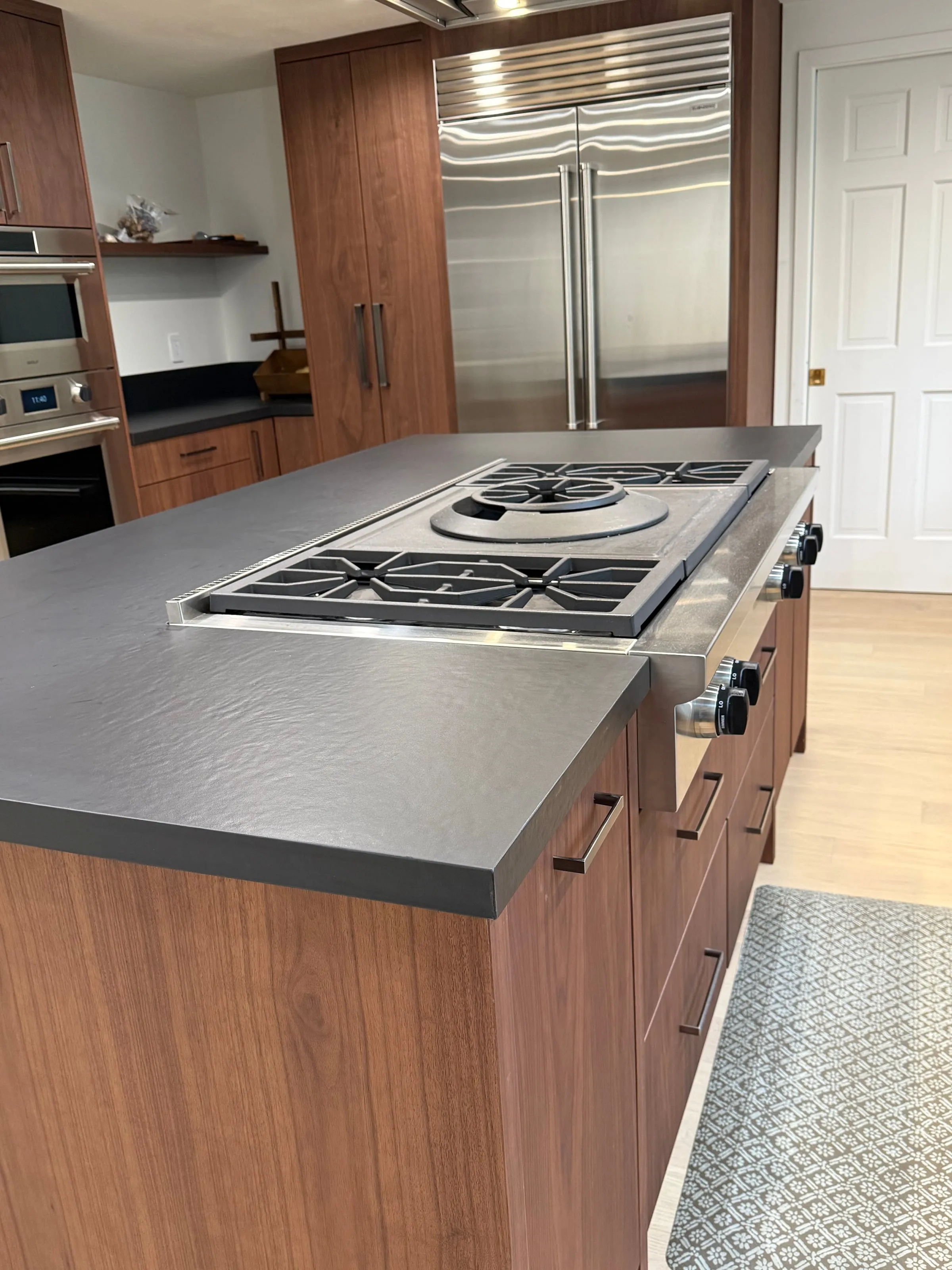
Sintered Stone
Sintered Stone Mitered Edge in Seattle
Sintered stone slabs joined at an angled cut form thick edges and waterfall sides that read as solid stone.
The detail
How Sintered Stone Mitered Edge Works
A sintered stone mitered edge uses the same technique as porcelain: two slabs cut at matching angles and bonded at the corner. Thicker sintered stone slabs give the joint more bonding area, and the brands publish fabrication guidance for mitering.
That guidance makes the outcome predictable for brands such as Dekton, Neolith and Lapitec. The result is a chunky edge or waterfall side that reads as one solid block.
Real projects
Sintered Stone Mitered Edge Gallery
Strengths and cautions
Strengths
- A strong joint with more bonding area
- Manufacturers publish mitering guidance
- Waterfall islands and thick edges that read as one block
- Full-body color can make exposed edges look clean
Cautions
- Slab cost is usually higher than porcelain
- Needs precise cutting and a color-matched bond
- Pattern flow depends on choosing the right slab section
Questions
Sintered Stone Mitered Edge: Your Questions Answered
Planning sintered stone mitered edge? Get a free quote
Share photos, rough sizes and the material you like. We will help you take the next step.