Porcelain
Porcelain Mitered Edge in Seattle
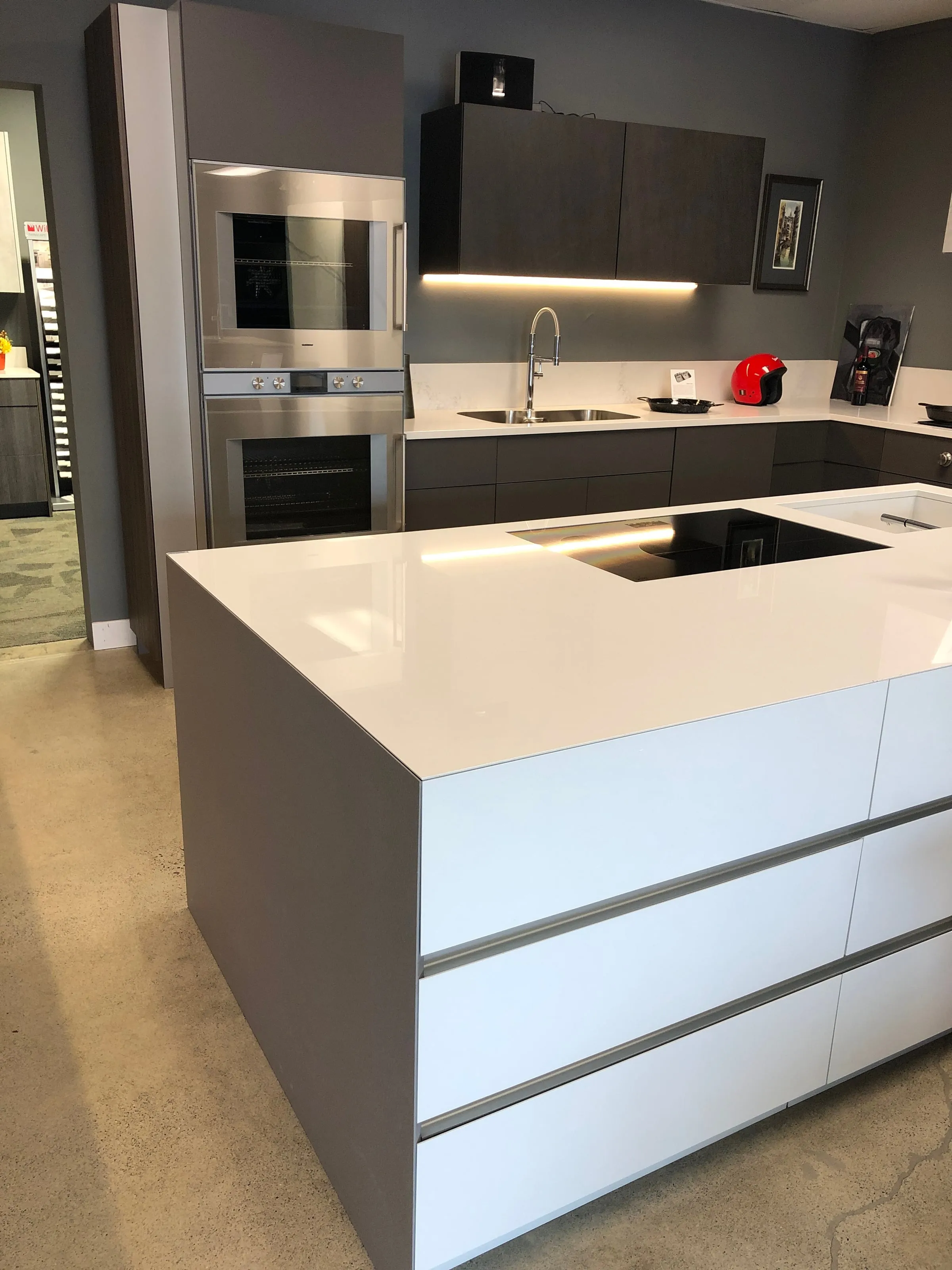
Two porcelain pieces joined at an angled cut give thin slabs a thick edge or a true waterfall side.
The detail
How Porcelain Mitered Edge Works
A mitered edge joins two slabs cut at matching angles to form what looks like one thick piece of stone. Porcelain slabs are thin, so a mitered build-up is the way to get a chunky edge or a true waterfall island.
Done well, the joint almost disappears and the pattern carries across the corner. The result depends on cut accuracy, a color-matched bond and good support at the corner.
Real projects
Porcelain Mitered Edge Gallery
Strengths and cautions
Strengths
- Gives thin porcelain the weight of a thick edge
- Makes true waterfall islands possible
- Bookmatched patterns can carry across the corner
- A clean, continuous look at the island edge
Cautions
- Needs precise cutting, so a poorly fabricated joint shows
- Adds fabrication work over a plain edge
- Not every porcelain design suits mitering
Questions
Porcelain Mitered Edge: Your Questions Answered
Planning porcelain mitered edge? Get a free quote
Share photos, rough sizes and the material you like. We will help you take the next step.